Weight Loss & GLP-1 Peptides
Tirzepatide Research Timeline: Key Published Study Milestones
22
Jun
Jun

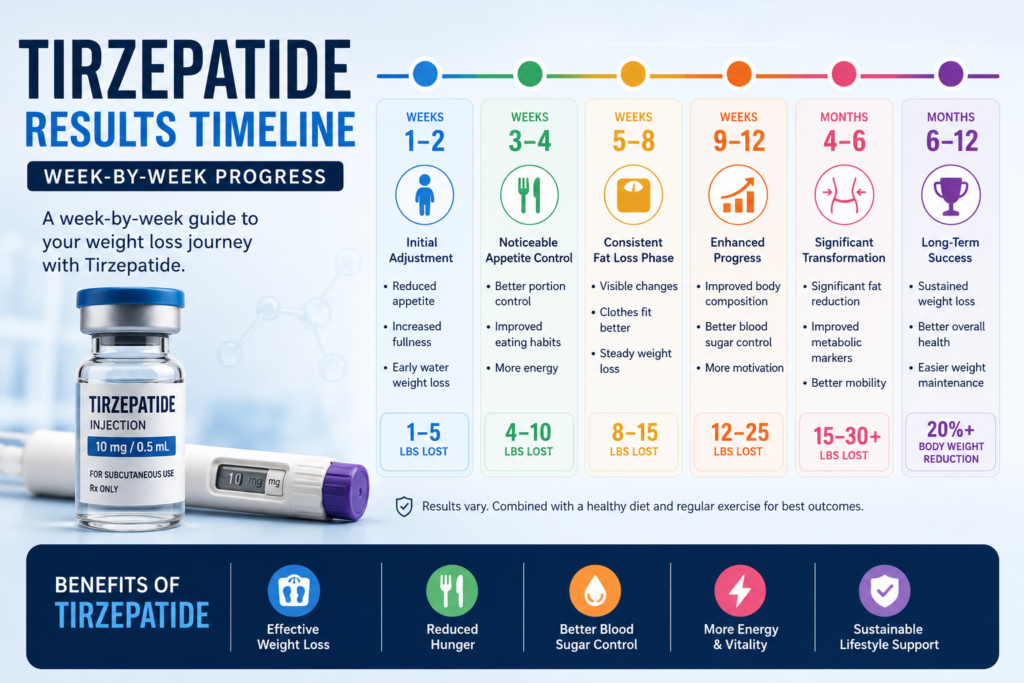
A useful tirzepatide timeline follows the development of evidence—not a promised week-by-week consumer result. Key milestones include receptor pharmacology, structural research and randomized studies.
Foundational studies characterized tirzepatide as a dual GIP and GLP-1 receptor agonist with an imbalanced and signaling-biased profile. This established mechanistic questions that later structural and biological studies continued to examine.
Cryogenic electron microscopy and molecular modeling helped researchers investigate how sequence and structural modifications influence engagement of GIP and GLP-1 receptors.
Work in human islets examined the contribution of GIP-receptor activity to tirzepatide-associated hormone secretion, highlighting why results from mouse and human systems may differ.
The SURMOUNT-1 publication reported a 72-week randomized trial in adults meeting the study eligibility criteria. The paper should be interpreted through its protocol, estimands, enrolled population, discontinuations and prespecified endpoints—not as a schedule of expected individual results.
Later publications expand knowledge about durability, different populations, mechanisms and safety. A research timeline therefore changes as peer-reviewed evidence accumulates.
Review tirzepatide receptor pharmacology or the retatrutide versus tirzepatide comparison.
No. It organizes published research milestones and does not predict individual outcomes.
They define eligibility, endpoints, duration, analysis methods and the context required to interpret results.