
-
Products are supplied strictly for laboratory and scientific research — not for human or veterinary use.
Research & Education
People often ask how long GLP-1 takes to work. Clinical trials show that weight change usually develops over months, not days, and the trajectory differs substantially among participants.
Trials typically report percentage change from baseline at scheduled visits over 68, 72, 104 weeks or longer. They do not establish a universal week when every person should see a particular result.
Approved products commonly use dose-escalation schedules intended to improve tolerability. Because exposure changes over time, results during early treatment should not be treated as the final response. Weight also fluctuates because of hydration, food intake and other factors.
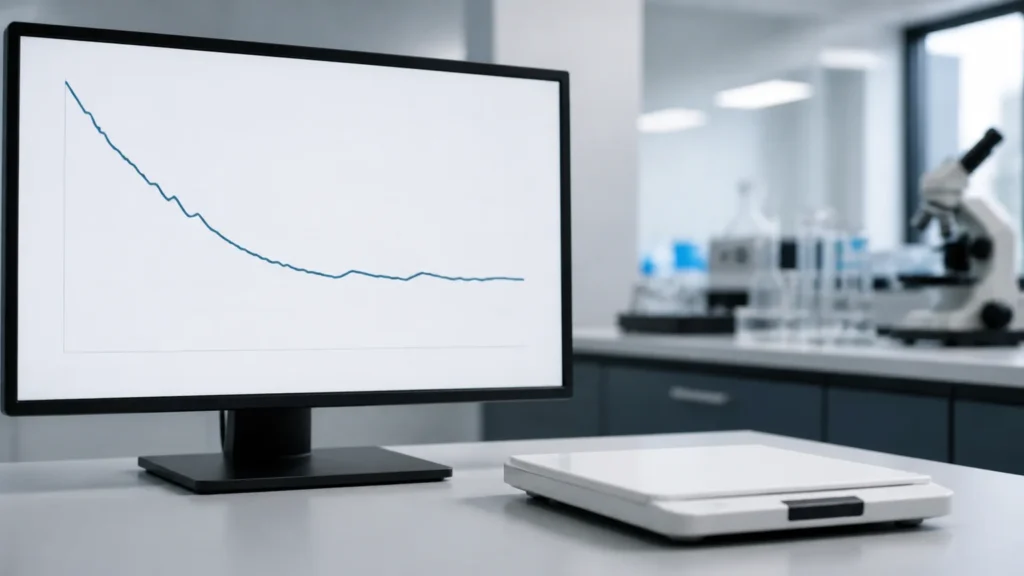
In STEP 1, weight declined progressively during the 68-week semaglutide study. STEP 5 showed sustained average reduction over 104 weeks, with the average curve flattening later. In SURMOUNT-1, tirzepatide outcomes were assessed over 72 weeks. These are population averages under trial protocols, not personal targets.
Trials differ in eligibility criteria, diabetes status, lifestyle programs, discontinuation rules, missing-data methods and doses. Comparing a single week or percentage across unrelated studies can be misleading.
Not necessarily. A clinician considers the complete clinical picture and the approved product’s labeling rather than one short interval.
No. Trial averages describe groups and cannot guarantee an individual outcome.
No medication change should be made without the prescribing clinician. Faster escalation can increase risk and may conflict with approved labeling.