Weight Loss & GLP-1 Peptides
Understanding Tirzepatide Vials: Concentration and Purity

01
Sep
Sep

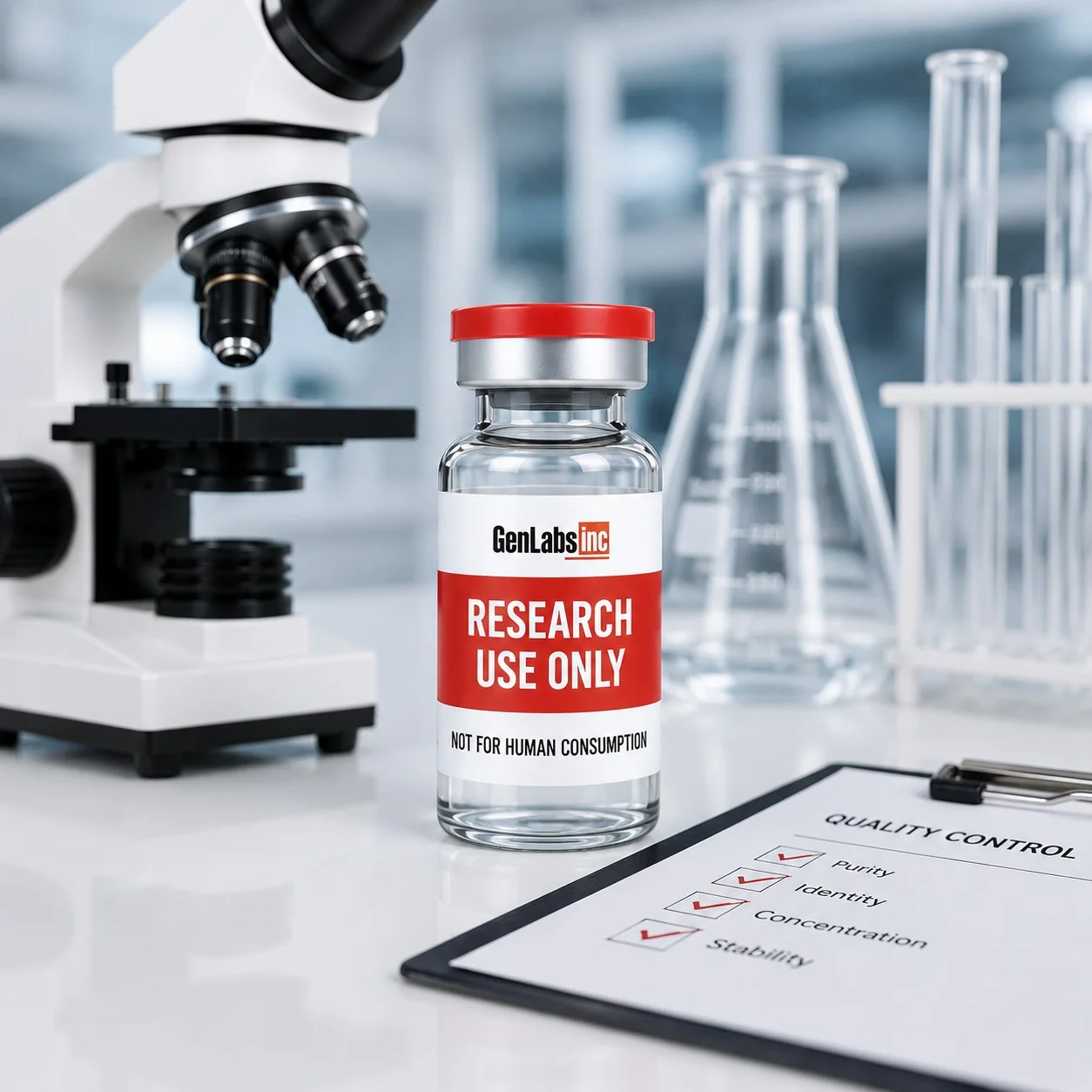
A vial label can list a compound name and nominal quantity, but those details alone do not establish identity, concentration, purity or fitness for a research protocol.
Quantity describes the total stated mass of material in a container. Concentration describes the amount per unit volume after preparation. Researchers must not infer concentration from vial size or appearance. The analytical record, protocol and controlled laboratory process determine how a material is characterized.
This article does not provide reconstitution or administration instructions.
Purity is method-dependent. High-performance liquid chromatography may report the relative area of a principal peak, but that number is not automatically the total chemical purity, peptide content or confirmation of identity. Water, residual solvents, counterions and other components can affect mass balance.
Identity testing such as mass spectrometry answers a different question: whether the measured molecular mass is consistent with the intended peptide. Researchers should evaluate identity and purity together.
A useful certificate should connect the test result to a specific batch or lot, name the analytical method, show the test date, report results clearly and identify the testing organization. A generic certificate that cannot be matched to the vial provides limited assurance.
Not necessarily. HPLC area purity and peptide content are different measurements.
No. Visual inspection cannot confirm molecular identity or chemical purity.
No. FDA approval applies to a specific drug product and manufacturing system.
Explore GenLab Meds Research Materials
Review batch-linked tirzepatide specifications before laboratory procurement. Research use only—not for human or veterinary use.
FDA concerns about unapproved GLP-1 products: https://www.fda.gov/drugs/drug-alerts-and-statements/fdas-concerns-unapproved-glp-1-drugs-used-weight-loss
Educational content only. This article does not provide medical advice, dosing or treatment instructions. Research products are for laboratory use only—not for human or veterinary use.