
-
Products are supplied strictly for laboratory and scientific research — not for human or veterinary use.
Interest in oral GLP-1 products has increased as new tablet formulations and indications have reached the market. The phrase “oral GLP-1 vs injection,” however, can make the products sound more interchangeable than they are.
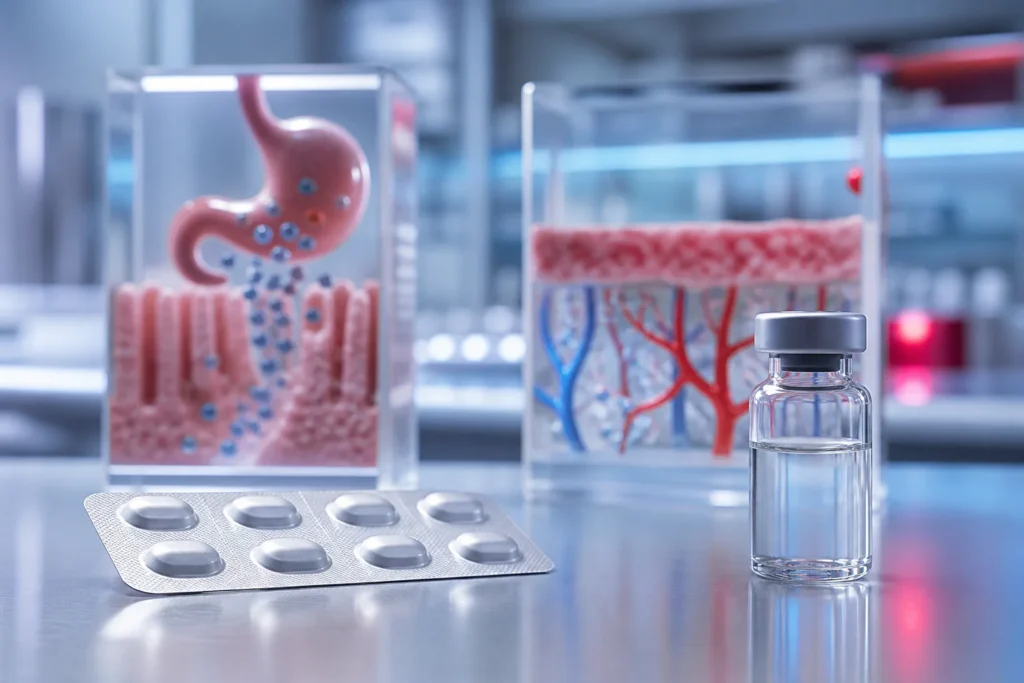
Both formats may act through the GLP-1 receptor, but formulation changes how the active ingredient reaches the body. Peptides are generally vulnerable to digestion, so an oral formulation requires specialized technology and administration conditions to produce reliable exposure. An injection avoids the gastrointestinal absorption barrier but creates different storage, device and administration considerations.
Researchers and readers should compare the exact product, indication, dose form and FDA-approved label—not simply the molecule name. A tablet and an injection containing semaglutide can have different approved uses, strengths, schedules and clinical evidence.
Oral peptide absorption can vary because food, water, gastric emptying and other medicines may influence exposure. Injection pharmacokinetics are also affected by formulation and dose, but they do not depend on intestinal absorption in the same way.
There is no universal answer. The relevant comparison depends on the approved indication, individual clinical circumstances, tolerability, access and a qualified prescriber’s assessment. A result from one formulation should not automatically be transferred to another.
No. They have product-specific labels and should not be substituted without a prescriber’s direction.
Not necessarily. Some oral products use formulation technology to enable absorption of a peptide molecule.
Review the GenLab Meds GLP-1 research category for research-use product specifications. Products are not intended for human or veterinary use.
Authoritative source: FDA Wegovy tablets prescribing information: Authoritative source