
-
Products are supplied strictly for laboratory and scientific research — not for human or veterinary use.
Peptides have become increasingly popular among researchers, athletes, and wellness enthusiasts due to their potential applications in weight management, recovery, muscle preservation, and overall health optimization. However, the effectiveness of any peptide depends heavily on proper handling, storage, and reconstitution practices.
Understanding peptide stability and storage is essential for maintaining product quality, preserving potency, and preventing degradation. Whether you are using Tirzepatide, Semaglutide, Retatrutide, BPC-157, or other research peptides, improper storage conditions can significantly reduce effectiveness.
In this guide, we'll explore what peptide stability means, how peptides degrade over time, the best storage methods, and frequently asked questions to help you get the most from your peptide products in 2026.
Peptide stability refers to a peptide's ability to maintain its chemical structure, purity, and biological activity over time. Since peptides are chains of amino acids, they can be sensitive to environmental factors including:
Storage practices directly impact peptide stability. Proper storage helps preserve molecular integrity and ensures the peptide remains effective throughout its intended shelf life.
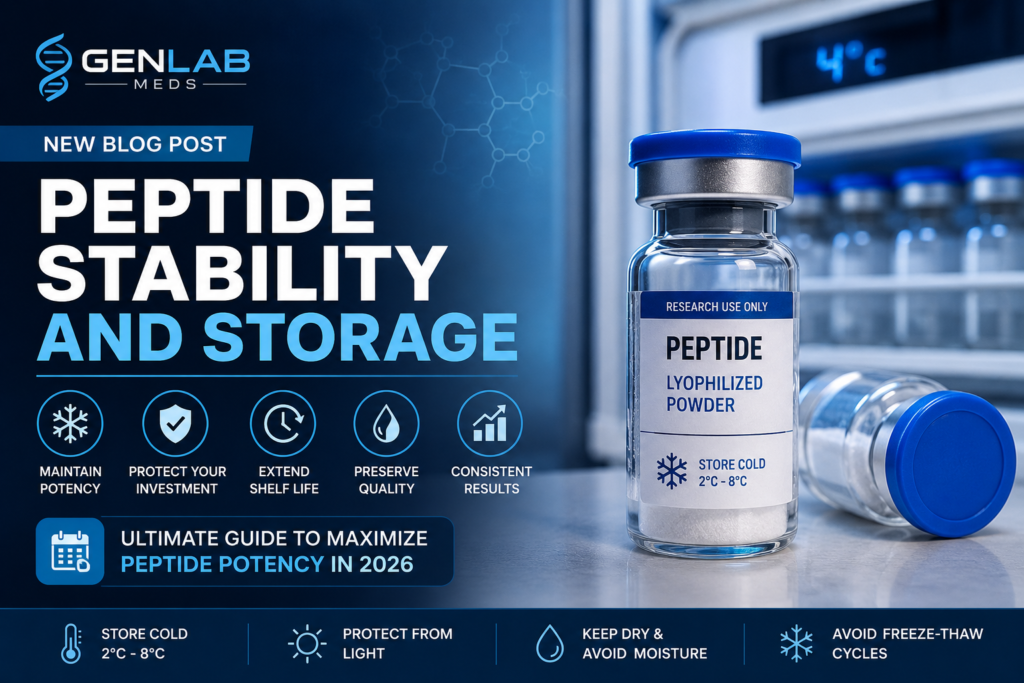
Lyophilized (freeze-dried) peptides generally have a longer shelf life than reconstituted peptides because moisture has been removed during manufacturing.
Understanding how peptide degradation occurs helps users protect their products more effectively.
Temperature is the most important factor affecting peptide stability.
Lyophilized Peptides
Reconstituted Peptides
Ultraviolet (UV) light can damage peptide structures. Always store peptide vials:
Moisture accelerates degradation. Before reconstitution:
Repeated freezing and thawing can damage peptide molecules. If long-term storage is necessary:
Proper storage helps preserve the peptide's intended effectiveness throughout its shelf life.
Correct storage conditions can significantly increase usable lifespan.
Peptides can represent a substantial investment. Proper handling reduces waste and replacement costs.
Maintaining stability helps ensure consistent dosing and predictable outcomes.
Following proper storage procedures helps minimize bacterial growth and contamination after reconstitution.
Most lyophilized peptides remain stable for 12–24 months when stored properly under refrigerated or frozen conditions.
Many reconstituted peptides remain stable for approximately 30–60 days when refrigerated, though stability varies by compound.
Short-term room-temperature exposure is generally acceptable during shipping, but long-term storage should be refrigerated.
Yes. UV exposure can accelerate degradation and reduce potency.
Failure to refrigerate reconstituted peptides may accelerate breakdown and increase contamination risks.
Proper peptide stability and storage practices play a critical role in preserving peptide quality, potency, and effectiveness. Temperature control, moisture prevention, light protection, and proper handling all contribute to maximizing product performance.
Whether you're storing Tirzepatide, Retatrutide, Semaglutide, BPC-157, or other research peptides, following recommended storage guidelines helps ensure you receive the full value and intended benefits from your products.
By understanding the science behind peptide stability, users can make informed decisions that support long-term peptide integrity and consistent results.
At GenLab Meds, we provide high-quality research peptides manufactured to strict quality standards.
Visit GenLab Meds today and explore our premium peptide collection.